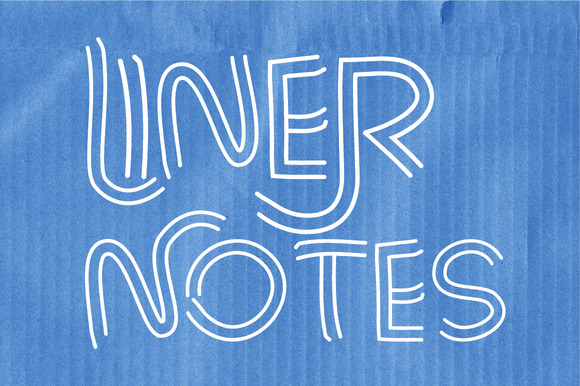
Liner Notes Family: A Guide for Listeners and Creators
Music has become a utility. We stream, skip, and shuffle through playlists designed to fade into the background. But a growing number of listeners are pushing back against this frictionless consumption. They want to know who played guitar on that session, what studio was used, and why the album art looks the way it does. They want context. This is the space occupied by the Liner Notes Family concept—a philosophy and format that restores the album to its rightful place as a complete artistic statement.
What the Liner Notes Family Represents
A Liner Notes Family is more than a box set or a compilation. It is a curated ecosystem. Each release in the series is bound to the others by a commitment to depth, quality, and narrative. The music is supported by extensive essays, archival photographs, production credits, and design that reflects the era of the recording. The "Family" aspect implies consistency and trust. When you pick up a volume in the series, you know exactly what you are getting: a meticulously researched, lovingly packaged piece of music history. It bridges the gap between the album as a product and the album as an artifact.
Why Different Audiences Approach It Differently
The beauty of the Liner Notes Family model is that it scales to your level of interest. A casual listener, a seasoned collector, and a working musician will all extract different value from the same release.
For the Collector and Music Hobbyist
If you are a collector, the Liner Notes Family represents a mission of completion. You inspect the spine alignment on the shelf. You listen for the warmth of the vinyl pressing. You evaluate the resolution of the booklet photographs. The priority here is physical quality and archival value. Instead of hunting for rare singles across multiple platforms, you have a definitive, curated collection. A practical example: you are collecting a series focused on obscure psychedelic rock from a specific region. Each volume uncovers new bands and offers remastered audio. The time you save on research and the confidence in the audio fidelity make the investment worthwhile. You evaluate a release by its build quality, mastering chain, and the rarity of the included material.
For the Professional Creator and Artist
For a musician, filmmaker, or writer, a Liner Notes Family is a masterclass in storytelling. How are the tracks sequenced to build an emotional arc? How does the typography on the cover reflect the mood of the music? How do the liner notes weave biographical details into a larger cultural narrative? This format teaches professionals how to build a cohesive body of work. It moves you from creating isolated pieces of content to building a world. A musician, for example, might use the structure of a Liner Notes Family to plan their own album cycle—releasing a trilogy of EPs with unified artwork, extensive online notes, and a documentary film. The long-term usefulness lies in its blueprint for artistic unity and audience engagement.
For the Educator and Lifelong Learner
The supplementary material in these releases is a goldmine of primary sources. Liner notes are often written by journalists, historians, or the artists themselves. They provide socio-political context, technical breakdowns of recording equipment, and biographical details that rarely appear in digital databases. An educator can use a specific volume to teach about the civil rights movement, the evolution of a genre, or the economics of the music industry. The learning value is the primary metric. A history teacher might use the liner notes from a soul music compilation to discuss the Great Migration, using the artists' own words as a gateway for students. Accuracy, depth, and citation quality become the deciding factors.
For the Casual Listener and General Consumer
You might not know every track on a volume. That is exactly the point. A Liner Notes Family acts as a trusted curator who filters out the noise. For a busy professional or a newcomer to a genre, it offers a high-signal entry point. You don't need to do the research because the research has already been done for you. The priority is accessibility and emotional discovery. Perhaps you discover a Liner Notes Family through a recommendation from a friend or an online review. You start with a volume that features a few familiar names, and those tracks guide you into deeper, unknown material. It turns passive background listening into an active, rewarding hobby. You evaluate it by how many new artists it introduces you to and how much it enhances your enjoyment of the music.
For the Entrepreneur and Small Business Owner
The subscription or series model inherent in a Liner Notes Family creates predictable revenue and deep customer loyalty. If you run a record label, a media company, or a niche publishing house, adopting this format can differentiate you from the daily flood of digital releases. You are no longer selling a single product. You are building a community of subscribers who eagerly await the next volume. A small label owner might launch a "Family" series dedicated to a local music scene, with each volume focusing on a different decade. Customers buy the series, creating cash flow that funds the next release. The focus here is on commercial viability, brand authority, and customer retention.
How to Evaluate a Liner Notes Family Release
Choosing where to invest your time or money depends heavily on your personal priorities. Here is how different factors matter to different users.
- Format Flexibility: Some families exist purely as high-resolution digital downloads with PDF booklets. Others are heavy, 180-gram vinyl box sets. If you are a digital nomad or freelancer who moves frequently, a cloud-based family offers portability. If you are a home listener who values ritual, the tactile experience of a physical box is irreplaceable.
- Speed of Access: In the digital age, we expect instant gratification. A Liner Notes Family often requires patience. Box sets get delayed. Records get pressed overseas. For a marketer or blogger, this creates a natural content calendar—anticipation, unboxing, deep review, and retrospective analysis. For the consumer, the anticipation becomes part of the experience.
- Cost vs. Long-Term Value: A single volume might cost as much as six months of a streaming subscription. However, a streaming subscription buys access, while a Liner Notes Family buys ownership and context. You are no longer renting a song; you are acquiring a legacy object. The resale value of well-maintained collections from respected families often holds steady or increases. For the budget-conscious consumer, this shifts the calculation from pure expense to investment.
- Quality of Curation: This is the most critical factor. Who selected the tracks? Who wrote the notes? A great release tells a story you did not know you needed to hear. A poor one is just a playlist in an expensive box. Look for names you trust in the essay credits. Study the tracklist. Does it balance deep cuts with entry points? The best families educate you while entertaining you.
Is a Liner Notes Family Right for You?
Before diving in, ask yourself what you want to get out of the music you consume. If you value background noise and high turnover of new singles, the format may feel too heavy for your daily habits. But if you find yourself wanting to linger on an album, to read the credits, and to understand the era in which it was made, then the Liner Notes Family model is built for you.
For beginners, look for a family that emphasizes variety and survey style—a broad overview of a genre. For experts, seek out families that dive deep into a single label, city, or recording year. For artists, focus on the packaging and the narrative structure. For business owners, study the marketing and the community building behind the series.
The common thread is a deep respect for the art form and a desire to connect music with its meaning. By shifting focus from the disposable single to the permanent collection, the format invites you to slow down and listen more carefully. Whether you are carefully placing a box set on your shelf or bookmarking a digital anthology, you are becoming part of a community that values context and quality. It is an invitation to stop scrolling and start listening.