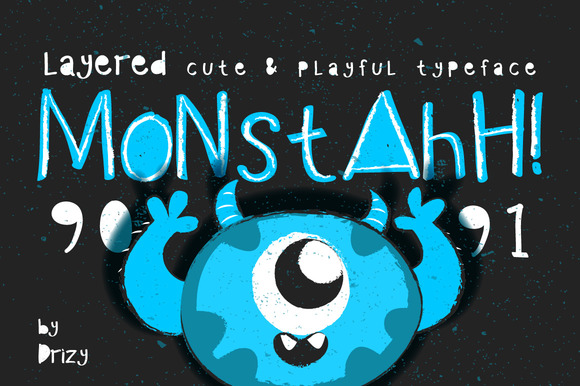
Unlocking Creative Flow With Monstahh
Every creative professional knows the feeling of hitting a wall. The blank canvas stares back. The brief feels too tight. The deadline looms. And somehow, the ideas that usually arrive with ease just won't come. That is where Monstahh enters the picture. Not as a magic fix, but as a practical framework for generating, refining, and applying creative ideas across projects, platforms, and audiences. Whether you are a designer looking for a fresh visual direction, a marketer trying to break through the noise, or a small business owner building a brand from scratch, Monstahh offers a way to move from stuck to productive without forcing the process.
Monstahh is best understood as a creative concept that encourages bold, structured experimentation. It does not rely on vague inspiration or waiting for a muse. Instead, it gives you repeatable methods to explore variations, combine unexpected elements, and test ideas against real-world constraints. For people who create for a living, that combination of freedom and structure is rare. And it is exactly what makes Monstahh useful across so many disciplines.
What Monstahh Really Means for Creators
At its core, Monstahh is about embracing the raw, unfinished, and sometimes messy early stages of creation. It asks you to generate without judging, to combine without overthinking, and to iterate without fear of failure. The name itself suggests something slightly untamed. A monster, but one you can direct. That shift in mindset alone changes how you approach a project. Instead of aiming for perfection on the first attempt, you aim for volume, variation, and discovery.
For a graphic designer, that might mean generating ten completely different visual directions before refining one. For a writer, it could mean drafting multiple headlines or openings without editing until the ideas are on the page. For a marketer, it might involve brainstorming campaign angles that feel risky or unconventional before filtering for what actually fits the brand. The point is not to abandon quality. It is to delay judgment long enough for something original to surface.
What makes Monstahh practical rather than theoretical is its emphasis on constraints. Pure open-ended brainstorming often leads to paralysis. Too many options, no clear direction. Monstahh works best when you set specific boundaries. A limited color palette. A strict word count. A single source of inspiration. A tight deadline. These constraints actually free your brain to explore within a defined space, which is far more productive than trying to think of everything at once.
For designers and visual creators
Designers can use Monstahh to break out of predictable visual habits. If you tend to rely on the same layout structures, typefaces, or color schemes, set a constraint that forces something new. Limit yourself to one font family. Work only in black and white plus one accent color. Use only imagery from a single source. These limits push you toward solutions you would not normally consider. The results are often more distinctive and memorable than your default approach.
Another practical application is creating a series of variations for a single design element. Take a logo mark, a hero image layout, or a button style and produce ten distinct versions. Not subtle tweaks, but genuinely different approaches. Then evaluate which ones communicate the intended message most clearly. This exercise builds your visual vocabulary and gives you a library of options for future projects.
Monstahh also works well for mood boarding and concept development. Instead of collecting images that all look similar, deliberately gather references that clash. Combine industrial textures with organic forms. Pair vintage typography with futuristic layouts. The friction between these elements often sparks ideas that feel fresh rather than derivative.
For marketers and content strategists
Marketing professionals face the constant challenge of standing out while staying on brand. Monstahh offers a systematic way to explore the tension between consistency and surprise. Start by listing every assumption you have about your audience, your channel, and your messaging. Then deliberately challenge one assumption per campaign. What happens if you speak to your audience as if they are experts rather than beginners? What if you use humor for a traditionally serious topic? What if you lead with a question instead of a statement?
Content calendars can also benefit from a Monstahh approach. Instead of planning topics that feel safe and expected, reserve a portion of your calendar for experiments. Test a different content format. Try a new tone. Write for a slightly different segment of your audience. Measure the results and learn from what works. Over time, these experiments build a richer understanding of what resonates and why.
For social media managers, Monstahh can inform content series that feel cohesive but never repetitive. Create a repeating format that allows for variation within strict parameters. A weekly post that uses the same structure but changes the visual style. A series of short videos that follow the same script template but explore different angles. The familiarity builds audience expectations, while the variation keeps them engaged.
For entrepreneurs and small business owners
Building a brand or launching a product involves countless creative decisions, from naming to packaging to messaging. Monstahh helps you avoid settling for the first decent idea. Instead, force yourself to generate multiple directions before committing. Write ten potential taglines before picking one. Sketch five logo concepts before refining any of them. Outline three different website structures before building a single page. The best solution is rarely the first one, and Monstahh ensures you have real options to choose from.
Another area where this approach shines is problem-solving. When a business challenge arises, map out as many potential responses as possible without filtering. Then group them by feasibility, impact, and alignment with your values. You will often discover creative solutions that would never have emerged from a linear, cautious thought process. Monstahh encourages the kind of lateral thinking that separates thriving businesses from those that simply follow the crowd.
Practical Ways to Keep Results Clear and Effective
Creative freedom without structure leads to chaos. Monstahh works best when you combine exploration with clear criteria for evaluation. Before you start generating ideas, define what success looks like for this specific project. Is it clarity? Emotional impact? Memorability? Conversion? By knowing your target, you can freely generate without losing direction.
Organize your ideas visually or in a structured document. Use boards, folders, or simple lists to group related concepts. This makes it easier to compare alternatives and identify patterns. When you see what keeps appearing across your variations, you have found something worth pursuing.
Another key habit is documenting your process. Capture not just the final idea but the rejected ones as well. A variation that did not work for one project might be perfect for another. Building a personal library of creative experiments gives you a resource you can draw on for years. Over time, your ability to generate useful variations becomes faster and more intuitive.
Consistency matters when you are applying Monstahh across multiple projects. Develop a personal or team workflow that includes a dedicated exploration phase separate from refinement and production. Protect that phase from premature criticism. Give yourself or your team permission to create work that is not yet polished. The magic happens in that gap between raw generation and careful editing.
Adapting Monstahh for Different Audiences and Platforms
A creative approach that works for one audience may fall flat with another. Monstahh is flexible enough to adapt. For a younger, trend-aware audience, lean into bolder visual experiments and faster-paced iterations. For a professional B2B audience, focus on clarity, utility, and subtle differentiation. The method stays the same, but the constraints shift to match the context.
Platforms also demand different applications. A print project benefits from tactile variations in paper stock, finishes, and layout density. A digital campaign requires attention to load times, responsive behavior, and user interaction patterns. When you use Monstahh for digital work, include technical constraints in your exploration. Test how your design performs on a slow connection or a small screen. These constraints often lead to more resilient and inclusive solutions.
For educators and workshop facilitators, Monstahh can be adapted into structured exercises that teach creative thinking without overwhelming participants. Set clear time limits. Provide specific materials or references. Ask participants to present multiple solutions rather than one perfect answer. This builds confidence and skill in a low-pressure environment. Students and trainees leave with a method they can apply independently, not just a finished project.
Hobbyists and freelancers benefit from the flexibility Monstahh offers. If you work alone, it is easy to fall into repetitive patterns. By deliberately introducing variation and constraint, you push your own boundaries without needing external feedback. The process itself becomes a tool for growth. Over time, your creative range expands, and the quality of your work improves naturally.
Making Monstahh Part of Your Regular Workflow
The most effective way to use Monstahh is to integrate it into your regular creative routine rather than treating it as a special exercise. Start small. Pick one project per week and apply the generate-first, evaluate-later approach. Notice how it changes the quality of your ideas and your confidence in selecting the best direction. Over a few months, the habit becomes second nature.
Pair Monstahh with other creative practices you already use. If you keep a sketchbook, reserve pages for rapid variations. If you use mood boards, challenge yourself to include at least one element that feels uncomfortable. If you write outlines, draft three different structures before committing. The method enhances whatever process you already have without demanding a complete overhaul.
For teams, set aside time for collective Monstahh sessions. Fifteen minutes of silent, rapid idea generation followed by group discussion. The combination of individual focus and collaborative feedback produces results that neither alone could achieve. And because the emphasis is on generating options rather than defending one idea, team dynamics stay constructive.
Ultimately, Monstahh is not about creating monsters for the sake of chaos. It is about giving yourself permission to explore the edges of your creativity within boundaries that keep you productive. The monster you create becomes something you can shape, refine, and direct toward real goals. That balance of wild exploration and disciplined execution is what makes the approach valuable for anyone who makes things for a living.
Start with one project. Set one constraint. Generate ten ideas. Pick the best one and refine it. Then do it again. Over time, you will not only produce better work. You will also develop a creative muscle that makes the entire process faster, more enjoyable, and more reliably original. Monstahh gives you the framework. The rest is up to you.